
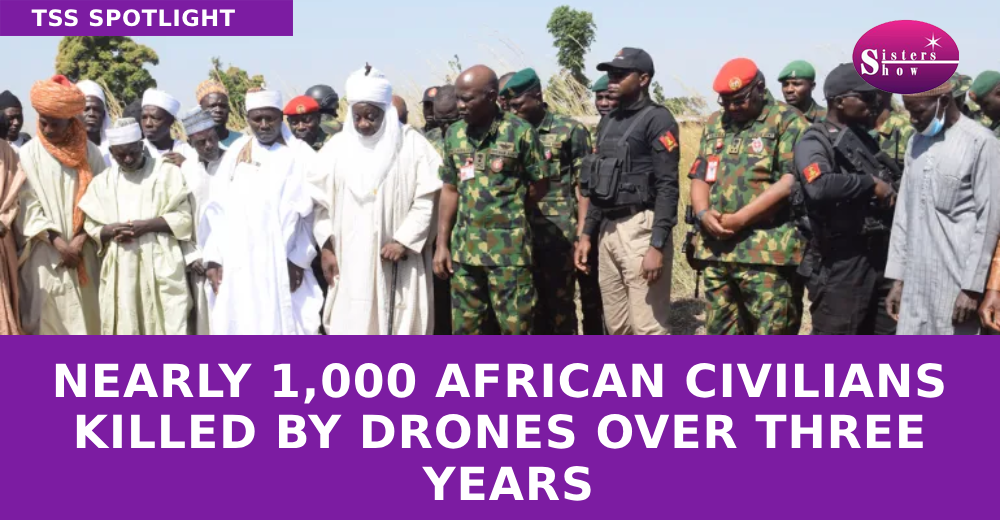
Nearly 1,000 African Civilians Killed by Drones Over Three Years
The increasing use of drones by several African nations in their ongoing battles against armed groups has led to a disturbing rise in civilian casualties, according to a new report. Between November 2021 and November 2024, at least 943 civilians were killed in more than 50 drone strikes across six African countries. The report, titled Death on Delivery, paints a grim picture of the widespread harm caused by drone warfare. It underscores that these strikes frequently fail to distinguish between combatants and civilians, resulting in significant collateral damage. Experts suggest that the true death toll could be much higher due to the secretive nature of many drone campaigns, which often lack transparency and accountability. This marks a troubling trend where governments deploy drones with minimal oversight, using them as a tool to avoid putting military personnel at risk while causing immense harm to innocent populations.
Since 2022, the number of African nations acquiring armed drones has increased sharply. These drones, particularly Medium Altitude, Long Endurance (MALE) systems, are viewed as an affordable way for governments to strengthen their military capabilities. At least 10 African countries have obtained such drones, justifying their purchases as a response to growing security threats and insurgencies. However, the reality on the ground has often been far from what was promised. Instead of targeting only militant groups, drone strikes have frequently hit civilian populations, raising concerns about human rights violations and the lack of precision in drone warfare. Cora Morris, the author of the report, argues that drones are marketed as a “clean” and efficient means of modern warfare, yet the civilian casualties tell a different story. Morris explains that drones lower the threshold for the use of force, making it easier for governments to carry out attacks without risking their own troops. As a result, military operations are increasingly carried out without proper consideration of the consequences for civilian populations.
The surge in drone acquisitions can also be attributed to shifting geopolitical dynamics, where African governments are seeking greater military independence. This shift is accompanied by a willingness to purchase drones from countries such as Turkey, China, and Iran, which are eager to sell these systems with little regard for their potential misuse. These suppliers often offer drones at a relatively low cost, without imposing stringent conditions or concerns about how these weapons will be used, thus accelerating their spread across the continent. Michael Spagat, an expert from Royal Holloway University of London, suggests that the trend is driven largely by economics. “Buying drones has become a cheap way for states to acquire significant firepower without having to invest in training personnel who might be lost in combat,” he says. He also warns that the proliferation of drones is just beginning, with non-state actors and rebel groups likely to adopt these technologies in the near future.
The report identifies six countries where the use of drones has had particularly deadly consequences for civilians: Sudan, Somalia, Nigeria, Burkina Faso, Mali, and Ethiopia. In Sudan, drones have been used extensively in the civil war between the Sudanese military and the Rapid Support Forces paramilitary group. Reports suggest that drone strikes have targeted civilian infrastructure such as markets and residential areas, killing scores of innocents. Similarly, Somalia has long been a battleground for drone warfare, with the United States military and other foreign forces conducting airstrikes against the al-Qaeda-affiliated group al-Shabab. However, these strikes have often resulted in civilian casualties, highlighting the limitations of using drones for counterterrorism operations. In Nigeria, drones have been employed in the fight against Boko Haram and other armed groups, but there have been numerous incidents where strikes hit civilian targets, such as a tragic drone attack in December 2023 that killed 85 people during a Muslim celebration in Tudun Biri village.
The situation in Burkina Faso is equally concerning. The conflict in the Sahel region has intensified in recent years, and drones have been used in operations against armed groups in both Burkina Faso and neighboring Mali. However, these strikes have resulted in significant loss of civilian life, further destabilizing the region. In Ethiopia, the government has increasingly relied on drones in its battle against the Tigray People’s Liberation Front (TPLF). Strikes on refugee camps and marketplaces have drawn international condemnation for the lack of accountability and the harm caused to civilians. The frequency of such incidents suggests a disturbing pattern in which drones are deployed with little regard for civilian protection, and victims are often left without recourse or recognition.
The report also highlights some of the deadliest strikes that have occurred in the past few years. One of the most devastating incidents occurred in Nigeria in December 2023, when a drone strike intended to target Boko Haram fighters struck a crowd of civilians observing the birthday of the Prophet Muhammad in Tudun Biri village, killing 85 people. In Ethiopia, a drone strike in October 2022 on a village in Oromia region killed at least 86 people, and subsequent strikes in the area caused further casualties. Somalia witnessed two deadly drone strikes in March 2024, in which at least 23 people were killed, yet the Somali government insisted that all casualties were militants, refusing to acknowledge the civilian deaths. Similarly, in Burkina Faso, a drone strike in August 2023 targeted a market in Bouro village, killing 28 people, while a September 2023 attack in Sudan’s Goro market left at least 46 people dead. These incidents underscore the growing dangers of drone warfare in regions already suffering from conflict, with the loss of civilian life increasingly seen as collateral damage in military operations.
The mounting death toll and the increasing use of drones in conflict zones have raised serious questions about the need for better regulation and oversight of drone sales and operations. The rapid expansion of drone warfare worldwide calls for stronger international arms control agreements. The report notes that while three main international arms control agreements currently govern the export of armed drones, these agreements are flawed and insufficient to address the growing risks associated with drone proliferation. Morris and Spagat both emphasize the need for an international control regime focused on preventing harm from the widespread use of armed drones. With more and more countries acquiring these systems and the likelihood of non-state groups gaining access to drones in the future, the risk of further civilian casualties and violations of international law is high. Therefore, experts are calling for urgent action to regulate the sale and use of drones, ensuring that the proliferation of these weapons does not continue unchecked and that the rights and safety of civilians are prioritized in any future drone operations.
Don’t miss out on the latest updates. Stay updated with The Sisters Show. Get all the details and never miss a beat!