
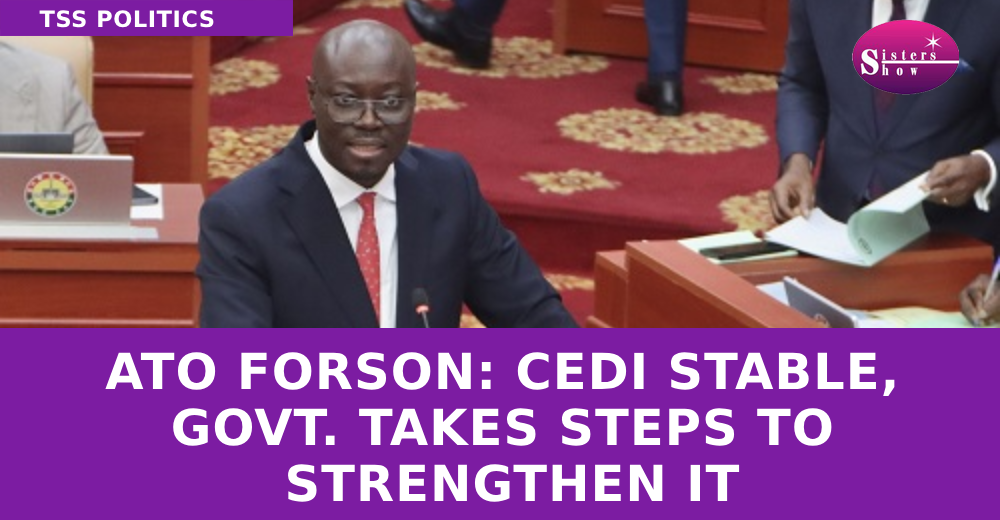
Ato Forson: Cedi Stable, Govt. Takes Steps to Strengthen It
Finance Minister Dr. Cassiel Ato Forson Assures Ghanaians of Cedi Stability and Government Measures to Strengthen the Currency
Finance Minister Dr. Cassiel Ato Forson has provided reassurance to the people of Ghana that the cedi has remained relatively stable against the US dollar since February 19, 2025, on the interbank foreign exchange market. During an address to Parliament on Tuesday, March 19, 2025, Dr. Forson discussed the ongoing measures being implemented to maintain this stability and curb any potential declines in the currency. The Minister revealed that as of March 14, 2025, the cedi was trading at GH₵15.53 per dollar, reflecting a 5.3% depreciation. While this marks a depreciation, it is an improvement compared to the same period last year, where the depreciation stood at 5.7%, indicating a positive shift in the currency’s performance.
Government’s Effective Measures to Stabilize the Cedi
Responding to a question from Mavis Nkansah Boadu, Member of Parliament for Afigya Sekyere East, on the government’s measures to curb the cedi’s decline, Dr. Forson credited the relative stability of the currency to the tight liquidity policies implemented by the Bank of Ghana. He highlighted that these measures have been effective in preventing further volatility in the foreign exchange market, ensuring that the cedi has not experienced dramatic fluctuations. The Finance Minister stressed the importance of continuing these measures to safeguard the national currency and protect the economic stability of the country.
Key Strategies to Sustain the Cedi’s Resilience
During his address, Dr. Forson outlined several key strategies the government is employing to sustain the cedi’s resilience and prevent significant depreciation in the future. One of the primary strategies includes the establishment of the Ghana Gold Board, which is aimed at enhancing the country’s foreign currency reserves. By strengthening these reserves, the government aims to increase the country’s ability to withstand external shocks that might negatively impact the value of the cedi. The Finance Minister also discussed the importance of bolstering forex market interventions, which would further stabilize the currency and improve the nation’s foreign exchange reserves.
Additionally, Dr. Forson emphasized the government’s commitment to prioritizing expenditure cuts to reduce pressure on the currency. By curbing unnecessary spending, the government aims to improve fiscal discipline, thereby easing the demand for foreign currency and ensuring that the cedi remains stable. These efforts are part of a broader economic strategy to strengthen the national economy and ensure a sustainable and resilient currency.
The 24-Hour Economy Initiative and Import Substitution Policy
Dr. Forson also revealed that the government’s “24-hour economy” initiative, which is set to be rolled out in the coming months, will play a significant role in enhancing the local economy and supporting the cedi’s stability. This initiative is designed to encourage increased economic activity around the clock, particularly in sectors that are vital to the country’s growth. A key component of this initiative is the import substitution policy, which aims to reduce Ghana’s reliance on foreign goods and services. By encouraging local production and consumption, the policy is expected to strengthen the local economy and, in turn, support the long-term stability of the cedi. The shift toward reducing imports will also help to reduce the pressure on the country’s foreign currency reserves, contributing to a more stable economic environment.
A Holistic Approach to Currency Stabilization and Economic Growth
Dr. Forson emphasized that the government’s approach to strengthening the cedi and ensuring economic stability is multifaceted. By combining measures such as tighter liquidity policies, improving foreign currency reserves, reducing unnecessary imports, and prioritizing local production, the government aims to create a more resilient and self-sustaining economy. These efforts, he explained, will not only help maintain the stability of the cedi but also foster long-term economic growth and development for the country.
The Importance of Continuous Monitoring and Adaptation
While the current measures have been successful in stabilizing the cedi, Dr. Forson emphasized that the government will continue to closely monitor the foreign exchange market and adapt its policies as needed. Given the dynamic nature of global financial markets and the various external factors that can impact the cedi, the government remains committed to being responsive and proactive in safeguarding the currency’s value. The Finance Minister expressed confidence that through continued fiscal discipline, sound economic policies, and strategic interventions, the cedi can be further stabilized and supported for the benefit of all Ghanaians.
Looking Ahead: A Focus on Sustainable Economic Practices
In conclusion, Dr. Cassiel Ato Forson assured Ghanaians that the government is fully committed to maintaining the cedi’s stability and ensuring the continued growth of the national economy. With a comprehensive approach that includes strategic forex market interventions, local economic initiatives, and tighter fiscal discipline, the Finance Minister remains optimistic about the future of the country’s currency and its broader economic health. These developments have been widely covered in African news outlets, highlighting the importance of currency stability in West Africa and the role of government policies in ensuring a prosperous future for the region.
Through these ongoing efforts, Ghana is poised to face the challenges of the global economy with a stronger, more resilient currency, one that can weather both internal and external economic pressures while continuing to support the growth and development of the nation.
Don’t miss out on the latest updates. Stay updated with Politics & World Affairs with The Sisters Show. Get all the details and never miss a beat!